You are what you eat... you're also what you think. Earlier this week I posted an interesting video portrayal of the power of thought- and how what we actually think effects our neurology. Fascinating stuff.
It's the basis for much of Cognitive Behavior Therapy which recognizes that what we think about ourselves, our environment and relationships can impact our interactions with them. So changing our narrative changes our behavior and perceptions as well. Consider the individual on the spectrum (or anyone for that matter) who has an internal narrative "I am not good at anything. I can not do it." This can be common for individuals who so frequently engage in black and white thinking, or all or nothing thinking. Sometimes linked to one negative experience in a sea of otherwise positive or neutral experiences.
What would the likelihood be that the individual would ever want to try anything new? Slim to none! Changing that internal narrative can have an immense impact on a person's ability to navigate the world.
Interesting is a blog post about Cognitive Behavioral Therapy with individuals on the spectrum, complete with research findings.
CBT with Individuals on the Spectrum

"My approach to intervention is rooted in respect for child development and focuses on making the mundane meaningful, looking at daily interactions as opportunities for learning and growth while respecting the uniqueness of the individual and family. It’s about setting high expectations for long term quality of life and relationships for individuals on the spectrum and implementing a specific and doable plan to get there one step at a time.”
– Lauren Wilson, LCSW, RDI® Program Certified Consultant
Showing posts with label Brain. Show all posts
Tuesday, February 5, 2013
Saturday, February 2, 2013
Fast & Slow Thinking
It's taking a bit for me to connect all the ways the examples in the video relate to guided participation- and individuals on the spectrum. One of the first things that popped in my mind, was appraisal... and how the fast brain in all of us makes quick appraisals of situations... and how so often for individuals on the spectrum this appraisal is off and based on a non-essential element of the situation or relationship at hand. Very interesting, I will be thinking about this more.
Labels:
Brain,
Core Difference,
Video Clip
The Power of Thought
I found myself thinking about individuals on the spectrum who sometimes display rather static imagination, while their neurotypical counter parts display dynamic/ever changing imaginary play. The leap I considered was if just the "imagination" of these scenarios changes neural connections... that so too would the static strengthen static connections.
Quite humbling exactly how pervasive a spectrum disorder is... and on the flip side how absolutely complex our neurology is.
Labels:
Brain,
Core Difference,
Episodic Memory,
Research,
Video Clip
Wednesday, September 21, 2011
The Social Brain and ASD
New research from Ami Klin
The Social Brain and ASD
"The discovery of distinctive brain activity patterns for individuals with ASDs and their siblings has great potential to advance autism research and clinical practice. By looking at the functioning of socially- activated regions of the brain, we may be able to tell who does and does not have ASD. We may also be able to tell who seems fine but carries (and perhaps overcame) genetic risk for ASD. There may come a time when a diagnosis of ASD -- and even a measure of its severity -- is based not just on observation of external behavior but on this "neural signature." In addition, new treatments focused on social deficits may intentionally target activation of crucial brain regions, while the effectiveness of older treatments might be measured by how activation of the social brain changes over time."
It has certainly been my experience that as children on the spectrum are given the opportunity to make those important neural connections make true progress in remediation.
The Social Brain and ASD
"The discovery of distinctive brain activity patterns for individuals with ASDs and their siblings has great potential to advance autism research and clinical practice. By looking at the functioning of socially- activated regions of the brain, we may be able to tell who does and does not have ASD. We may also be able to tell who seems fine but carries (and perhaps overcame) genetic risk for ASD. There may come a time when a diagnosis of ASD -- and even a measure of its severity -- is based not just on observation of external behavior but on this "neural signature." In addition, new treatments focused on social deficits may intentionally target activation of crucial brain regions, while the effectiveness of older treatments might be measured by how activation of the social brain changes over time."
It has certainly been my experience that as children on the spectrum are given the opportunity to make those important neural connections make true progress in remediation.
Labels:
Brain,
Research,
Video Clip
Thursday, September 15, 2011
Intersubjectivity and Mirror Neurons
It's long, 54minutes, but very interesting.
Labels:
Brain,
Research,
Video Clip
Friday, July 15, 2011
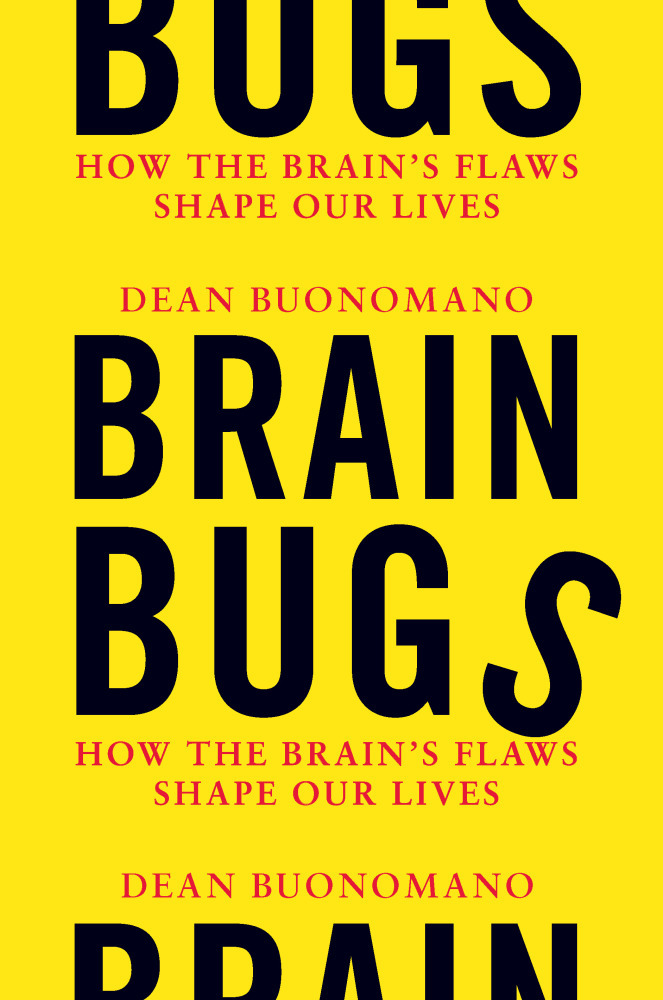
Brain Bugs
http://www.npr.org/2011/07/14/137552517/brain-bugs-cognitive-flaws-that-shape-our-lives
Fascinating and easy to understand look at how the brain works & creates (and changes) memories.
Subscribe to:
Posts (Atom)